
How Addiction Affects the Brain
Addiction changes how the brain works. Learn how drugs and alcohol affect brain chemistry, decision-making, and emotions—and how the brain can heal during recovery.
Introduction
Addiction is often misunderstood as simply a lack of willpower or self-control. In reality, addiction involves complex changes in the brain that affect how a person thinks, feels, and behaves.
Drugs and alcohol can alter the brain’s chemistry, influencing the systems responsible for pleasure, motivation, decision-making, and emotional regulation. These changes can make it difficult for someone to stop using substances even when they want to.
Understanding how addiction affects the brain can help reduce stigma and highlight why recovery often requires time, support, and patience.
The Brain’s Reward System
How Pleasure Works in the Brain
The brain has a natural reward system designed to encourage behaviors that support survival, such as eating, social connection, and physical activity.
When we experience something enjoyable, the brain releases chemicals such as dopamine, which create feelings of pleasure and motivation. This system helps reinforce behaviors that are beneficial for well-being.
How Substances Affect the Reward System
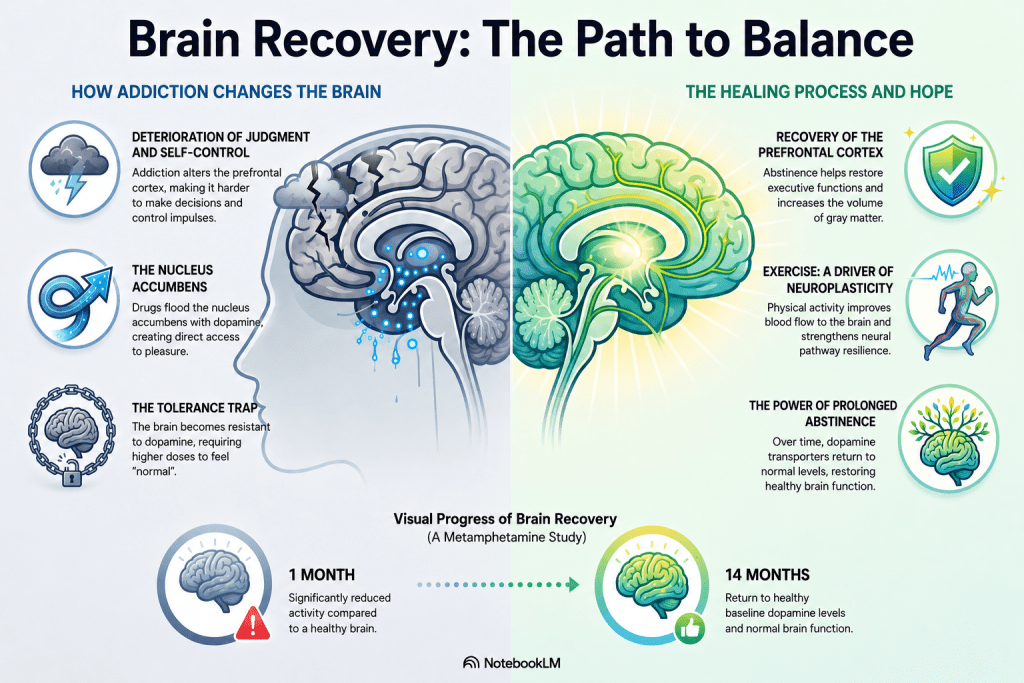
Drugs and alcohol can trigger the release of dopamine in much larger amounts than natural rewards. This intense stimulation can create powerful feelings of pleasure or relief.
Over time, the brain begins to associate substances with reward and may prioritize them over other activities such as relationships, hobbies, or responsibilities.
This process can make substance use feel increasingly important to the brain.
Changes in Brain Chemistry
Tolerance and Dependence
As substance use continues, the brain may adapt to the presence of drugs or alcohol. This can lead to tolerance, meaning a person needs more of the substance to achieve the same effect.
At the same time, the brain may become dependent on the substance to function normally. When the substance is reduced or stopped, withdrawal symptoms may appear.
These changes can make quitting feel physically and emotionally challenging.
Reduced Natural Pleasure
Over time, the brain’s reward system may become less responsive to everyday activities. Things that once brought joy—such as spending time with friends or engaging in hobbies—may feel less satisfying.
This effect can contribute to the cycle of addiction, as substances begin to feel like the easiest way to experience pleasure or relief.
Effects on Decision-Making and Self-Control
Addiction can also affect the parts of the brain responsible for judgment, impulse control, and long-term planning.
These areas help people evaluate consequences, manage impulses, and make thoughtful decisions.
When addiction alters these brain functions, individuals may continue using substances even when they are aware of negative consequences such as health problems, financial difficulties, or relationship conflicts.
This helps explain why addiction can be so difficult to overcome without support.
Emotional and Stress Responses
Substance use can also affect brain systems involved in stress and emotional regulation. Over time, individuals may become more sensitive to stress, anxiety, or negative emotions when not using substances.
As a result, some people begin relying on drugs or alcohol to temporarily relieve these uncomfortable feelings, which can reinforce the addiction cycle.
Learning healthier ways to cope with stress becomes an important part of recovery.
Can the Brain Heal in Recovery?
Neuroplasticity and Healing
According to research from the Recovery Research Institute, the brain can gradually heal and rebalance during recovery from addiction.
The brain has an incredible ability to adapt and repair itself, a process known as neuroplasticity. When someone stops using substances, the brain gradually begins to restore its natural balance.
Although this process takes time, many people experience improvements in mood, concentration, sleep, and emotional stability during recovery.
Supporting Brain Recovery
Certain healthy habits can support the brain’s healing process, including:
- Getting enough sleep
- Eating balanced and nutritious meals
- Regular physical exercise
- Practicing mindfulness or stress management
- Staying connected with supportive people
- Participating in therapy or recovery programs
These habits help strengthen the brain and promote long-term well-being.
Understanding Addiction With Compassion
Learning how addiction affects the brain helps explain why recovery is not simply a matter of willpower. The brain changes involved in addiction can strongly influence behavior, motivation, and emotional regulation.
Recognizing addiction as a health condition rather than a personal failure can encourage compassion, understanding, and more effective support.
Final Thoughts
Addiction affects the brain in powerful ways, changing how people experience pleasure, manage stress, and make decisions. These changes can make substance use feel difficult to control, even when someone wants to stop.
The encouraging news is that the brain can heal over time. With support, healthy habits, and continued commitment to recovery, many people experience significant improvements in both brain function and overall well-being.Understanding the science behind addiction reminds us that recovery is not just about stopping substances—it is about allowing the brain and body the time and support they need to heal.
Sources
Recovery Research Institute. (n.d.). Brain in recovery: How the brain changes during addiction recovery. Recovery Answers.
https://www.recoveryanswers.org/recovery-101/brain-in-recovery/